
When a person faces criminal allegations or the possibility of arrest, understanding the available legal remedies is important. Bail vs Anticipatory Bail is a common point of confusion because both provide protection from prolonged custody, but they apply at different stages of a criminal case. Knowing the difference can help an accused person understand which type of bail may be appropriate in a particular situation.
Under Indian criminal law, bail provisions are now primarily governed by the Bharatiya Nagarik Suraksha Sanhita (BNSS), 2023, which replaced the Code of Criminal Procedure (CrPC). The nature of the offence, stage of proceedings, circumstances of the accused, and judicial discretion can all influence whether bail is granted.
What Is Regular Bail?
Regular bail is generally sought after a person has been arrested or is already in custody. It allows the accused to be released from custody while the criminal proceedings continue, subject to conditions imposed by the court.
The court may consider factors such as the seriousness of the alleged offence, possibility of the accused fleeing, likelihood of influencing witnesses, previous criminal history, and the circumstances of the case.
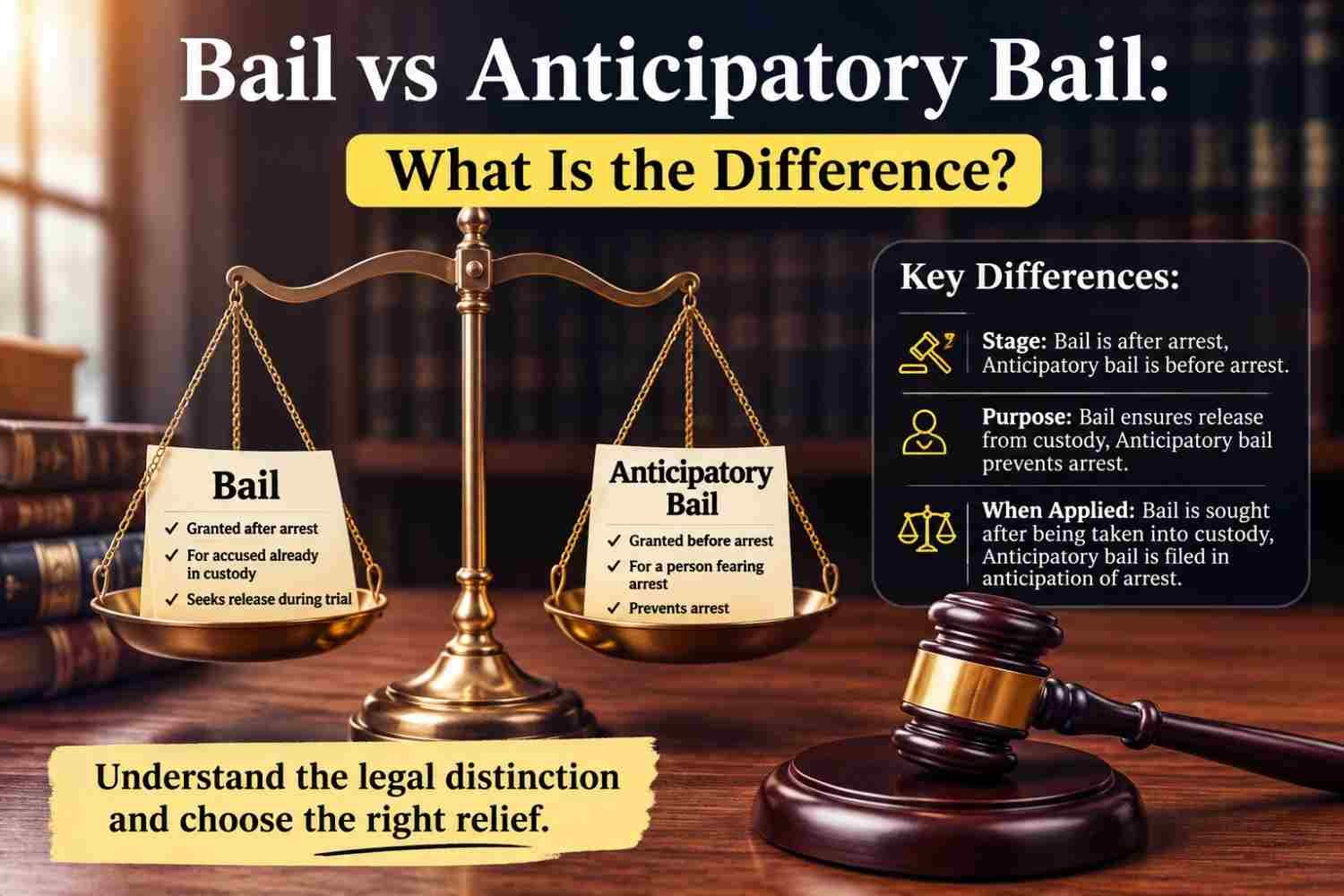
Therefore, when comparing Bail vs Anticipatory Bail, the key point is that regular bail normally operates after arrest, whereas anticipatory bail is sought as protection against an anticipated arrest.
What Is Anticipatory Bail?
Anticipatory bail is a form of pre-arrest protection available to a person who has reason to believe that they may be arrested for a non-bailable offence. It allows the person to approach the appropriate court before arrest and request protection, subject to the court's decision and conditions.
Anticipatory Bail Under BNSS
The BNSS has provisions, sort of directions for granting bail to a person who is apprehending arrest. In such situations, the court may lay down certain conditions, like cooperating with the investigation, showing up for questioning whenever it becomes necessary, and not tampering with witnesses or interfering with the evidence.
Anticipatory bail does not mean that criminal proceedings automatically end. It primarily provides protection against custody in accordance with the order passed by the competent court.
Difference Between Bail and Anticipatory Bail
In simple words, Bail versus Anticipatory Bail is mostly about where in the timeline this safety is being asked for. Regular bail is usually sought after a person is already arrested, whereas anticipatory bail gives pre-arrest cover when someone is fearing they might get nabbed for a non-bailable offence.
If you need help with bail, criminal proceedings, or related legal issues, a professional Advocate service tis hazari can help you understand the legal process that applies and the remedies that may be available. Since bail decisions depend on the specific facts and situation of each individual case, getting timely but appropriate legal guidance can matter quite a lot.
The Difference between Bail and Anticipatory Bail can be understood by looking at when the application is made and the type of protection sought.
This distinction is central to understanding Bail vs Anticipatory Bail and choosing the appropriate legal remedy.
Regular Bail vs Anticipatory Bail: Which One Is Applicable?
The answer depends largely on the stage of the criminal matter. If an accused has already been arrested, an application for regular bail may be considered. If a person reasonably apprehends arrest in connection with a non-bailable offence, anticipatory bail may be the relevant remedy.
However, every case has different facts. The nature of allegations, available evidence, previous conduct, investigation requirements, and other circumstances can affect the court's decision.
Key Factors Courts May Consider
While deciding bail-related applications, courts may consider several factors, including:
The seriousness and nature of the alleged offence.
The circumstances surrounding the accusation.
The possibility of the accused fleeing from justice.
The likelihood of influencing witnesses or tampering with evidence.
The accused's cooperation with the investigation.
Previous criminal history, where relevant.
The overall facts and circumstances of the case.
Understanding these factors is important when considering Bail vs Anticipatory Bail, because the court's decision is based on the individual circumstances of each matter.
Why Legal Guidance Matters in Bail Matters
Bail proceedings can drag in all kinds of procedural and legal stuff, and it really matters how it’s handled. Picking the right remedy and getting the relevant facts across in the proper way can be more important than it sounds, even if it seems routine. If someone is up against arrest or has criminal proceedings moving, they should seek professional legal advice that is matched to the exact circumstances of the case.
An experienced Criminal lawyer Tis Hazari Court can help assess the circumstances, identify the appropriate bail remedy, prepare the necessary application, and represent the accused before the appropriate court.
Final Thoughts
Understanding Bail vs Anticipatory Bail is important for anyone facing criminal allegations or the possibility of arrest. While regular bail is generally sought after arrest, anticipatory bail is a pre-arrest remedy available in appropriate cases where a person apprehends arrest for a non-bailable offence. The applicable legal remedy depends on the facts, circumstances, and stage of the case.
Because bail situations can get pretty tangled with legal plus procedural things, getting quick direction from a seasoned attorney can help you sort out what you are allowed to do and what choices you might have. Every matter is different, though, so any legal advice really should be anchored in the actual details of your specific situation, not in broad guesses or general expectations.